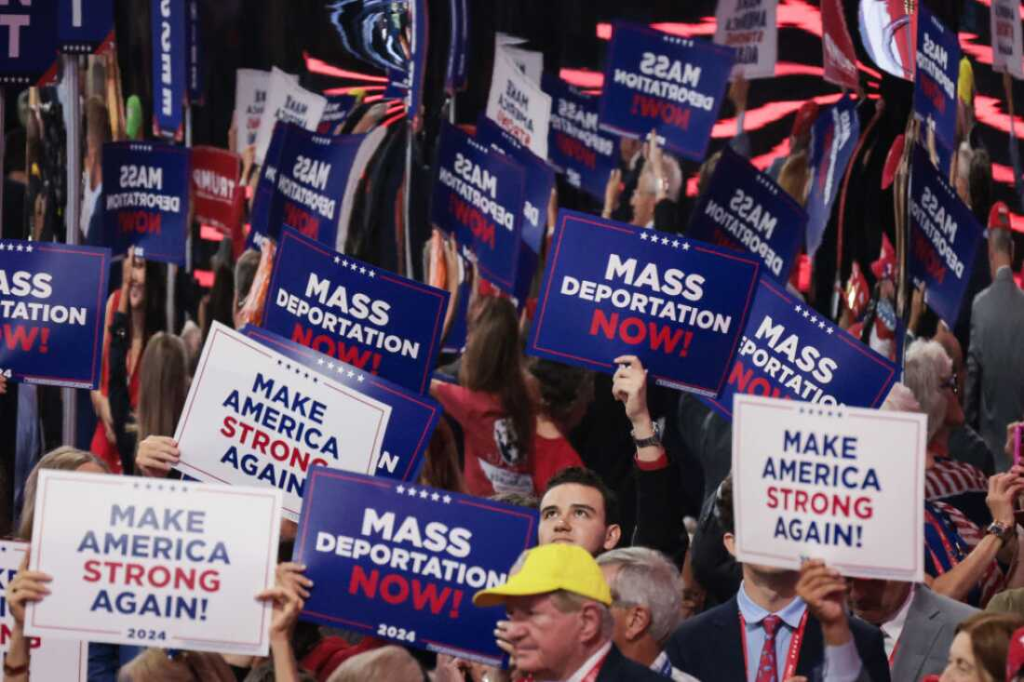
During Trump’s second term, Immigration and Deportation have become a significant issue during his presidency for many reasons. During his campaign, he heavily wanted to focus on border security. He tried to dramatically reduce illegal immigration. This follows his approach of “ America First”. Currently, Trump has increased the number of arrests and deportations around the country. During this time, deportation has sped up, and the military has been at the border. Federal funding has also been cut off to immigrants.
Before Trump: A Brief Look at U.S. Deportation Policy
Looking back at the Presidents before Trump, who also dealt with the issue of deportation. Starting with President Obama’s approach to deportation in the years 2009 to 2017. During his two terms, more than 3 million people were deported. He prioritized deporting people who were caught crossing the border and people with a criminal record. His deportation was done with a formal approach. He imposed a fine on companies that were hiring immigrants who are undocumented immigrants. He is also credited with creating the Deferred Action for Childhood Arrivals ( DACA ), which protects undocumented immigrants who are children from deportation.
Years before, we looked at President George W. Bush approached the issue of deportation from the years 2001 to 2009. Bush invested in border patrol and security at the border. With a case hearing on deportation, he sometimes went for faster deportation than going through with the full court hearing.
Overall, Obama focused on a more formal removal of undocumented immigrants and was more structured, while Bush focused on rapid deportation and stopping border crossings. He wanted it done fast and quickly, rather than formally and structured.
Trump’s Vision: “America First” and Immigration Enforcement
Over Trump’s first and 2nd presidency, he has had a vision when it comes to the enforcement of immigration. His main goal is to lower the overall number of immigrants in the country. He proposed a plan called the “ Four-Pillar Plan.” He added more money for securing the border. This also included the border wall. He wanted to pave a way for young undocumented immigrants called “ DREAMers” and limit family-based immigration, which is also known as “ chain migration.”
Going on the topic of “ America First” and what it means for the country. This puts U.S. interests above global concerns. It focuses on jobs, industries, and the borders of America above anything. It focuses on border control, which helps protect the country from foreign control. This limits involvement from international groups and focuses more on industrial growth within the country.
Key Policies and Executive Orders During the Trump Era
In the past months and his previous term, Trump has endorsed some key policies and executive orders regarding deportation. His main order is his order to deport immigrants, no matter if they have a criminal record or not. This order went out to all undocumented immigrants. He also put funding towards building the border wall to prevent illegal crossing. He also allowed quicker deportation, similar to Bush’s order, and increased ICE enforcement to deport more immigrants faster.
Public Reactions and Political Responses
The public has mixed views on this new order. Many republican Americans support this enforcement of deportation on undocumented immigrants. Charts have shown that more Americans are accepting a tougher approach towards immigration than in the past years. There have been Human rights Groups that have grown strongly against Trump’s Immigration policy. There has been a huge split in reaction in the country.
On the topic of political parties, it has been shown that republicans have been more supportive of these new immigration policies. Democrats have opposed these policies, and some believe immigrants should be more protected.
Charts and Polls show that the verdict of people regarding these new policies on immigration and deportation is mixed based on the political party, race, and ethnicity.
Effects on Florida
Florida is a state with one of the largest immigrant populations in the country and has felt a significant impact from the recent changes in immigration and deportation policies.
Local law enforcement agencies in Florida have increasingly cooperated with federal immigration authorities under Trump’s policies. Programs like 287(g), which allow local officers to act as immigration enforcement agents, have expanded in several counties. This cooperation has led to more ICE raids and detentions in places like Miami-Dade, Collier, and Polk Counties.
Communities with high immigrant populations have reported increased fear and reluctance to engage with public services, such as hospitals or schools, due to concerns about deportation. Many families have been separated, and some children have been left without guardians after parental deportations. Advocacy groups and immigrant-rights organizations in Florida have spoken out, citing a rise in mental health issues and economic instability within affected communities.
Economically, sectors like farming and hospitality both heavily reliant on immigrant labor have faced worker shortages. Employers in rural parts of Florida, especially in the southern agricultural zones, have reported difficulty finding enough labor to harvest crops, leading to financial losses and rising product costs.
Politically, Florida reflects the national divide. While many conservative areas support stronger immigration enforcement and view it as a necessary step to preserve public safety and job opportunities for citizens, urban centers like Miami, Orlando, and Tampa have shown stronger opposition to the policies. Local protests, community-led aid networks, and city resolutions have emerged in resistance to deportations.
Overall, Florida serves as a clear example of how federal immigration policies can deeply affect a state’s economy, public services, and social cohesion especially one with such a diverse and significant immigrant population.
What’s Next? The Future of the U.S. Immigration Policy
What’s Next for the country with the newly implemented U.S. Immigration Policy? Mass deportation is a common event happening. ICE raids are happening more, and it is leading to quicker deportation. The number of daily arrests has gone up immensely. ICE raids are happening in many more public areas. A proclamation made on June 4th has restricted entries from 12 countries and limited 7 others. Executive Order 14160 seeks to end birthright citizenship, which falls under the 14th Amendment. The Laken Riley Act has required detention for undocumented immigrants charged with theft or violent crime. This policy regarding Immigration and Deportation has led to widespread concern. The nation remains divided, and what’s next for the country is undecided.

 Criminally Informed
Leave a comment