What Did Trump Just Sign—and Why Now?
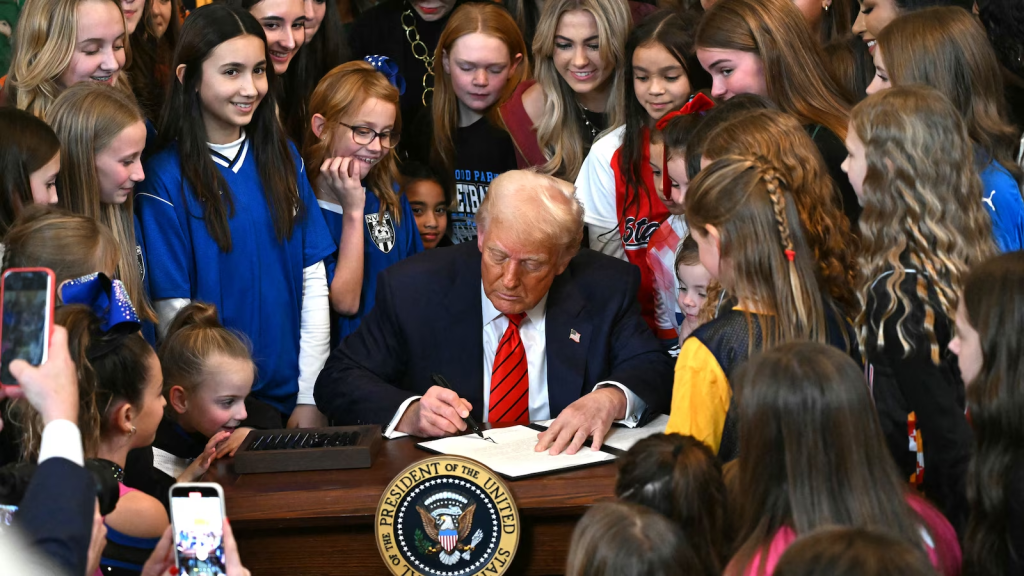
The Trump administration issued an executive order that will restrict access to gender-affirming care for individuals under the age of 19. This will prevent any institution receiving federal research and education funding from providing such care to minors. This order also requires that the secretaries of the Department of Health and Human Services and the Department of Insurance Programs update the interpretation of the Affordable Care Act. This includes Medicaid, Medicare, and Tricare.
Across the country today, medical professionals are sterilizing a growing number of impressionable children and are falsely claiming they can change a child’s sex through a series of irreversible medical interventions. This has to stop. Children soon regret these medical interventions and start to grasp the horrifying tragedy. With this act, the U.S. will not fund, sponsor, promote, or support the so-called “transition” of a child from one sex to the other. It will rigorously enforce all laws that stop these destructive altering procedures.
Behind the Headlines: What’s Happening With Kids and Gender Care
Let’s talk about puberty blockers for the youth. Puberty blockers are used to delay changes of puberty in transgender and gender-diverse youth who have officially started the steps of puberty. The medicine most commonly used is called gonadotropin. It has been shown that the majority of those seeking gender-affirming care are experiencing gender dysphoria, which is labeled as “psychological distress.” Numerous studies have shown that transgender youth are more likely to suffer emotional distress, depression, experience bullying, self-harm, or attempt suicide.
It has been shown that puberty blockers are given between the ages of 8–14 years old. After the age of 14, some gender-affirming surgeries are allowed. These are permanent changes that are happening to kids who don’t understand the consequences these surgeries have on their lives. Focusing more on puberty blockers, like any medication, they come with side effects. Some of the mild side effects are weight gain, headaches, and mood changes, while more long-term effects are fertility problems, bone density and growth, and growth spurts.
Protecting Children or Playing Politics?
Like any case, you have people who will support it and people who won’t.
Some have said this new executive order is a good thing. Many states have agreed with President Trump on this. Trump has called these treatments “chemical and physical mutilation” and has signed this new order in a measure to protect children. “Puberty blockers, hormone therapy, and surgeries are a form of child abuse,” stated President Trump in a campaign video from January of 2023, when this idea was just a campaign promise. He had promised that under his presidency, he would take action and punish those medical professionals who had provided gender-related medical care to minors. Trump stated he would protect kids from what he described as “radical gender ideology.” Now, in 2025, Trump has come through and passed the executive order protecting children from these horrors.
On the other hand, this executive order left some people in shock. People have come out and said, “Politics and partisanship have no place in patient care, and we all deserve the freedom to be ourselves.” For young trans people, this fight is beyond the courtroom. Boy and girl were never meaningful to them. Now, as their physical self matures, they worry about how they see their own body. They stated that these new changes feel violating. Cameron, one of the young trans people who started treatment at 12, remembered feeling “less stressed and a little more hopeful.” They stated, “I do not want to feel like a stranger in my body.” Once Trump issued this executive order that cut off puberty-blocking, their anxieties came rushing back.
For some, this order is seen as a positive good. For others, a horror.
The Debate: Rights, Risks, and Responsibilities
With anything, there are always risks and benefits. For many, this gender-affirming care improves mental health and overall well-being. They have been proven to build self-esteem and improve overall life for gender-diverse youth. It has also been proven that those who socially transitioned in their childhood were associated with lower odds of lifetime marijuana use compared to those who waited until adulthood. It has been proven that earlier social transition has led to better mental health.
Gender-affirming surgeries and treatments can lead to a copious amount of physical health risks. Individuals who undergo genital surgery (primarily male-to-female) may develop strictures or narrowing of the urinary tract. This makes urination difficult and may lead to additional surgeries in the future. Like any surgery, gender-affirming procedures carry the risk of postoperative infection, tissue death—which may require emergency intervention—and the most common one: regret. Overall, these surgeries will leave a lasting impact on you, whether good or bad.
Where Do We Go From Here?
In January 2025, President Trump signed the Executive Order on Protecting Children from Chemical and Surgical Mutilation, marking a bold and controversial moment in the conversation on gender-affirming care. Trump’s actions are framed as a medical obligation to protect vulnerable children from decisions that can cause irreversible harm.
This executive order is just the beginning of a larger legal and cultural shift. Families, doctors, and lawmakers will need to navigate through the tensions between affirmation and caution. Whether you are for or against this executive order, Trump has made one thing clear: the well-being of the youth—physically, mentally, and emotionally—must remain at the center of the debate.

 Criminally Informed
Leave a comment