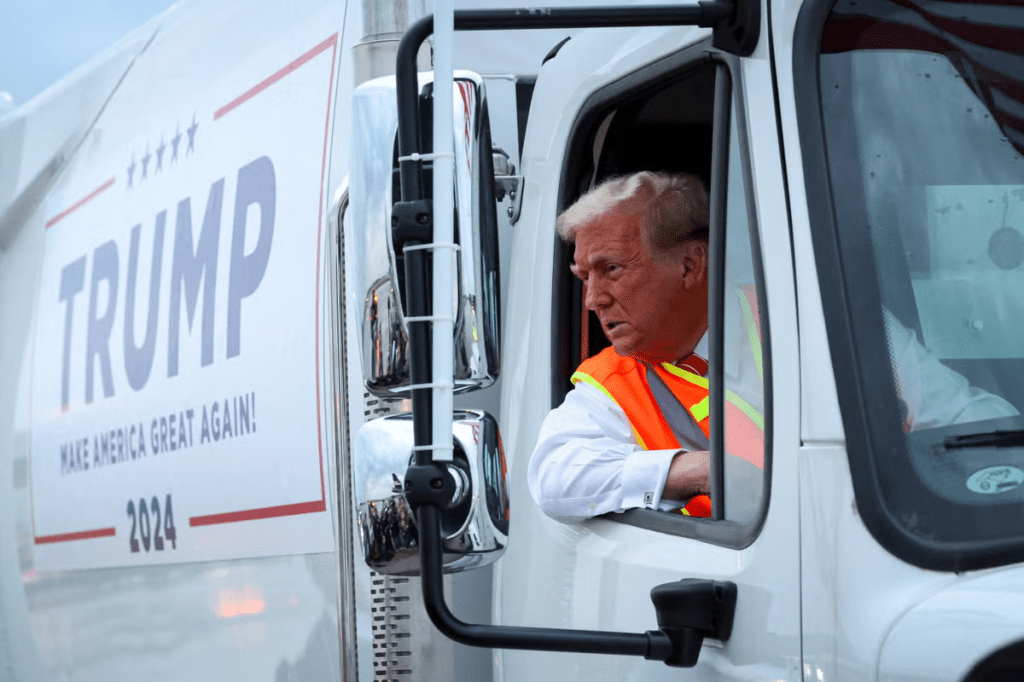
Trump’s New Executive Order on Truck Driver English Proficiency: A Safety Measure or Unnecessary Barrier?
Recently, President Donald Trump recently signed an executive order which requires commercial truck drivers in the U.S. to pass an English literacy test. This order makes it necessary for drivers prove their ability to read, write, and speak English without the assistance of an interpreter. While supporters argue that this will improve public safety, critics are concerned about its potential to unfairly impact immigrant drivers and worsen an already strained labor shortage in the trucking industry.
The Purpose Behind the Executive Order
To start, the goal of this executive order is to enhance road safety. According to the White House, drivers need to be proficient in English to read traffic signs, follow regulations, and communicate effectively with law enforcement or emergency personnel. This is especially crucial in high-pressure situations, like traffic stops, accidents, or inspections.
White House press secretary Karoline Leavitt explained that the order would address what the administration sees as a dangerous communication gap between truckers and officials. The order directs and forces the Department of Transportation (DOT) to enforce stricter standards for English proficiency, which many of Trump’s supporters argue will reduce risks on the road, particularly with the surge of trucking-related fatalities.
The Controversy: Safety or Discrimination?
Despite the safety argument, the order has faced harsh criticism, particularly from immigrant communities and industry groups. Many truck drivers, particularly those who are foreign-born, are already driving safely despite not being fluent in English. Critics argue that the rule will most affect immigrant drivers.
Furthermore, it is also important to mention that there is currently an already existing crisis regarding a shortage in truck drivers, critics fear that the new rule could worsen the problem. The trucking industry, which relies heavily on immigrant labor, is already struggling to meet demand, and this mandate could lead to fewer qualified drivers on the road.
The Economic Impacts
Moving on, this executive order could have unintended consequences for the economy. Trucking is an integral piece in the U.S. supply chain. A disruption to the industry’s workforce could lead to delays, higher shipping costs, and inventory shortages. Some industry experts worry that the new rule might discourage many immigrants from pursuing or continuing a career in trucking, further deepening the driver shortage and exacerbating the crisis.
A Look at the Bigger Picture
Even though Trump’s focus on public safety is the key element of the executive order, it also aligns with the broader political themes around immigration and national identity. Earlier this year, Trump signed another executive order making English the official language of the U.S. By reinforcing English as a mandatory requirement for truck drivers, the president is exemplifying the underlying larger conversation regarding language, culture, and safety.
Looking into the Past: The Legacy of Literacy Tests for Immigrants
To fully understand the implications of this order, it is necessary to look into the past. In 1917, the United States under Woodrow Wilson passed the Immigration Act, which introduced a literacy test. This was a policy largely intended to limit immigration from Eastern and Southern Europe, where many immigrants did not speak English. These tests became a barrier to entry, impacting non-English speakers and immigrants from marginalized backgrounds.
Though such tests were eventually phased out, debates over English proficiency continued moving forward. Nevertheless, in 1965, the Immigration and Nationality Act eliminated racially based quotas and signaled a move toward more inclusive immigration policy. However, language remained a focal point in discussions around who is considered fully capable of integrating into American society.
In 2000, President Bill Clinton signed Executive Order 13166, titled “Improving Access to Services for Persons with Limited English Proficiency.” This order required federal agencies and any organizations receiving federal funding to provide language assistance to people who spoke limited English. The goal was to expand access and prevent discrimination, particularly in public services like healthcare, education, and transportation.
President Trump’s 2025 executive order represents a significant shift in direction. It revokes Clinton’s executive order and establishes English proficiency as a safety standard for commercial drivers.
Therefore, this executive order brings back a long-standing debate over whether English proficiency is a practical necessity or a gatekeeping mechanism. Just as literacy tests in the early 20th century were used to decide who was “fit” to join American society, this new policy raises broader questions about inclusion, opportunity, and fairness in the workforce.
As the new rules take effect, the impact on the trucking industry and the lives of drivers across the country will be closely watched. The historical context serves as a reminder that language policy often carries deeper social and political implications, shaping not just the workforce, but also the national identity.
What’s Next?
This new rule is still in its early stages. The Department of Transportation is expected to issue further guidance on how the order will be enforced and whether it will apply to existing truck drivers or just new applicants. Legal challenges from civil rights groups and labor unions are likely, especially given the potential for this policy to disproportionately affect immigrants and minority communities.
In the end, the impact of Trump’s executive order will depend on how it’s implemented and whether the trucking industry can balance safety concerns with the need for a diverse and skilled workforce. As this policy develops, it’s important to keep an eye on how it affects both road safety and the livelihoods of those working in the trucking industry.

 Criminally Informed
Leave a comment